Beauty Masked as Attractive Mathematics
I enjoyed my visit to your website
http://www.beautyanalysis.com. While I have some issues with your aesthetics (summarized by: what
is attractiveness?), I think your analysis is fascinating.
The most powerful statement on your website for me is:
"MBA believes that this information and technology can empower individuals within our species to have a greater and more clear understanding of human attractiveness and its role in our behavior."
Very laudable and very much the most important thing in your work. Your approach to it is a little dated-- it belongs in the 19th Century (no offence). Despite Picasso’s efforts, there is an obvious struggle still taking place in our increasingly image-centric global culture, between a monolithic concept of beauty and the plural one embracing gender, age and ethnicity that we have inherited. Like the Victorians and today’s fashion magazines and video images, you are using your wonderful mathematical tool to squeeze everyone into the facial features of a Swedish blonde.
Your analysis pre-supposes that beauty has a normal distribution – that some people are more beautiful than others. Why does this have to be so? While arbitrarily, we can set a standard like your webpage, with one facial form at one end and another at the other (based in your case on the goodness-of-fit to the “Mask”, correlating that with attractiveness is in my opinion, impossible. I believe that your technology is more useful for understanding the plurality of attractiveness than for standardizing the concept of beauty.
You have found an ideal mask but do not discuss the vast and deeply significant history of masks in human culture. I am from Sierra Leone where we have one mask tradition associated with female education, social initiation and beauty called Bundu or Sande. I would guess that it is the direct equivalent of your ideal of attractiveness as expressed by these cultures. I invite you to, as they say in the vernacular, ”analyse these” :
Images of Bundu masks on Google
You might also consider this next link that discusses what engenders attractiveness in these masks:
Mende concepts of beauty/attractiveness
If beauty is in the eye of the beholder, then surely attractiveness must itself consist of a magical internal decagon of smell, sight, sound,etc… you get the idea.
West African mask traditions are an unparalleled exploration of the geometry of beauty, attractiveness, humanness, and spirituality in the face. Everything from raw triangles and circles among the Dogon to stunningly idealized Benin Bronzes can be found:
African masks
You are on dangerous ground when you say:
“The primary image of "humanness" is the genetically coded visual image of an "ideal" human face. The more a face resembles this "Ideal Human Face Image" - the more we perceive it to be human. When a face is perceived to be human that perception sets off in us a conscious response of "attraction" and "positive emotion". If this subconscious visual perception of "humanness", if strong enough (that is if the face we see looks enough like our subconscious image of "humanness"), then the conscious response will be elevated to a combination of a sense of "strong attraction" and a sense of "strong positive emotion". “
This is classic eugenics. Based on this argument, I would say that the vast majority of humans still struggle to perceive humanness in a positive way! Once again my problem is with – I quote, “our subconscious image of "humanness"” -- though the actual mechanistic representation of the image –and how it is connected to attraction and positive emotions may be the same in our brain cells, how we project the visual image of a face in front of us onto it is surely unique to the individual – and rather plastic. It is well known that the young of many species go through a period after birth called imprinting when their brains decide what should be their “mother” or more generally, The primary internal image that we have of our OWN face is not visual – it is sensory. The first visual image(s) we have of our faces are typically those of our parents. We must map the visual images onto the sensory image, and learn that the sensory image can be made to map to several visual images including “repose frontal” and “smiling frontal” archetypes. I saw a news article somewhere recently saying that recognition of emotions is pretty much independent of culture so there should definitely be more archetypes for you to find.
It is in the nature of ethnicity-- perhaps even its origin—that other ethnic groups should be ‘non-ideal’ and engender ’repulsion’ and ‘negative emotion’. This is the biggest challenge to multiculturalism and true
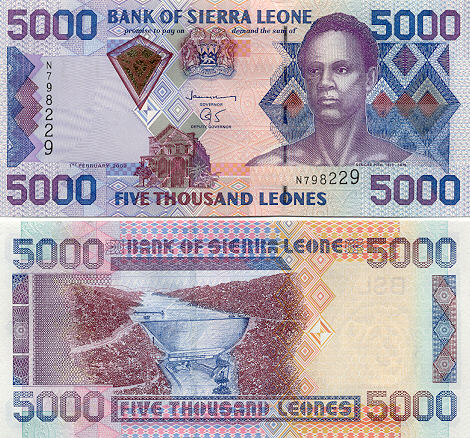
Cultural Liberty. There is about 10 times as much genetic variation among Africans as there is among all other ethnic groups—any analysis of human facial variation should reflect that. The New World was built by Mende people from Sierra Leone among many others enslaved (see
http://www.amistad.org/ and this image of Sengbe Pieh on a
modern bank note). If you compare the Mende Bundu masks in the links above with 19th Century European art, it is clear that there must have been a real clash in the perception of beauty, attractiveness and humanness underlying the encounter of Europe with Africa. It clash still exists today and of course, analogous things still apply with sex (homophobia) and age too.
They also apply to other species—another area that mask-making traditions have explored extensively, and which I believe is an important future frontier for your work. I have always been fascinated by the resemblances between individual human faces and other animal species. Like my friend Charles Fox who actually resembled a fox! On the other
modern bank note shown in the link above, you will see a picture of Bumbuna Hydroelectric Dam. I visited there recently, and share with you these two pictures showing how images of faces can be projected on the wings of insects. Instead of flying away when disturbed, this creature spreads its wings and presents a dramatic face to would-be predators. Boo! Note the realistic eyes complete with white reflection of the light in the center of the pupil and the eyebrows. I wonder, does your mask fit? Which one? Repose or smiling?


One of the most amazing discoveries of the last 20 years is homeotic genes. They were first discovered in flies but have since been found to be widespread in nature. In a nutshell, versions of these genes control the development of bodyplan/shape in almost every creature examined so far—plant and animal. This link:
http://www.dhushara.com/book/evol/homeo/homeo.htm gives a good graphical illustration of the point. So the genes that establish the Golden Ratios in flowers, flies, worms, whales and humans are all directly related – even still occurring in the same order along the DNA strand some times.
Our attitude towards animals (ownership, consumeable resource, etc.) implicitly denies them the humanness black people fought for for 400 years. Now that we know that biological mechanisms are there to create the golden symmetries that supposedly evoke “the Beauty Response” shouldn’t we invest the time to nurture positive reactions towards animals? Some of us have—the Dinka’s and the Hindus adore cows. But there are creatures even closer to us on the evolutionary scale. There are 75 chimpanzees in rehabilitation at the
Tacugama Chimp Sanctuary – I could arrange to get you the photographs you would need to analyse them. Personally, I would be very interested in the quantitative difference between the human masks and the chimp masks since genetically, humans and Chimps are about 96% percent identical (the genome of chimpanzees has just been published this week). Both facial archetypes presumably emerge from the decagon in your beautiful animation—Oh, did I say beautiful? Animation? Now there is a word with potential—
animation. I have a new use for it. I believe the future holds a more enlightened time when your technology will empower surgeons to offer cosmetic face surgery that makes fashionable individuals look more like-- another species (Catwoman? Spiderman? Batman?). If I am still alive, I would opt to look like one of the magnificent masks our ancestors used to explore the infinite landscape of attractiveness.