Sunday, October 11, 2020

Brother Babs.


Humor


"A Pastor found a baboon that could talk. So he taught it how to sing, pray and preach. 

At one Sunday service, the Pastor said to the congregation, 

"The Baboon is going to pray today." 

The Baboon sat still and the Pastor repeated over and over again "The Baboon is going to pray today", but the Baboon did not respond. 

After the service pastor asked the Baboon, "Why didn't you want to pray when I asked you to?" and the Baboon answered, "Was it necessary to call me Baboon? Everybody here is referred to as Brother irrespective of their status in life. You could have at least said Brother Babs!" πŸ˜‚πŸ˜‚πŸ˜‚πŸ˜ƒπŸ˜ƒEveryone deserve little R*E*S*P*E*C*T"

Friday, September 02, 2016

Thursday, December 04, 2014

Tommy played a mean pinball.

The personality of chimpanzees is once again in the news and in the courts. A novel case caught the attention of the media this last week.

New York courts are probably too black and white to have dealt with this question in any other way than a reference to rights, responsibilities and legal accountability.

The protagonists did the usual thing of trundling out the scientific research and cataloging the marvelous human capabilities that chimpanzees are known to have, when they brought their petition for writ of habeas corpus 
When the complaint was filed, in early December 2013, Steven Wise, the president of the Nonhuman Rights Project, said: “Not long ago, people generally agreed that human slaves could not be legal persons, but were simply the property of their owners. . . We will assert, based on clear scientific evidence, that it’s time to take the next step and recognize that these nonhuman animals cannot continue to be exploited as the property of their human ‘owners.’”

Adam Smiths "On the Wealth of Nations" -- on which the Post-Reagan-Thatcher ethos of globalization is based -- explicitly accounts slaves as property. The "correctness" of Smith's economic tenets, so beloved of conservative economists, is therefore implicitly founded on a model of society in which a large number of persons live without human rights under the law. Perhaps this explains why the global equation still refuses to balance into any kind of utopian state of well-being among all men and women-- half of us still need to be treated as property for the model to work. 

Of course the economist attitude towards the rest of nature of Smith's time was equally without regard to personality and its implications for the role of intelligence in the proper functioning of our planet. It is long overdue that we took the next step. It would also have been better if we had done it before globalization.

The decision quotes the legal definition of a person thus:

"So far as legal theory is concerned, a person is any being whom the law regards as capable of rights and duties.. . .
Persons are the substances of which rights and duties are the attributes. It is only in this respect that persons possess juridical significance, and this is the exclusive point of view from which personality receives legal recognition"
Centuries of dutifully recorded observation confirm that non-human species enjoy rights and perform reciprocal duties in the context of their own social contracts, and in the wider community of species in their native ecosystems. We even borrow terms like "alpha male" and "maternal instinct" from the language of such observations. In deed, such reciprocal balance is almost always a required attribute for individual survival in any species.


The Court's ruling on Tommy's personhood turn on the inability of chimpanzees to comply with human law. Presiding Justice Karen Peters is reported to have written that:
"Needless to say, unlike human beings, chimpanzees cannot bear any legal duties, submit to societal responsibilities or be held legally accountable for their actions. In our view, it is this incapability to bear any legal responsibilities and societal duties that renders it inappropriate to confer upon chimpanzees the legal rights – such as the fundamental right to liberty protected by the writ of habeas corpus – that have been afforded to human beings."
The question is, what is the origin of the rightness or wrongness of human actions? Why does society need responsibilities and duties in the first place if not the maintenance of our relationship to the natural world? Economy is a proxy for ecology. Money is only as good as the food, shelter and water it can provide -- no matter how high the sky-scraper, the Bodegas or Starbucks' on the groundfloor are still proxies for fruit trees.

Judging the personhood of chimpanzees according to their ability to comply with our proxy ecosystems is disingenous at best, and at worse, replete with with the cruelty of a circus Ringmaster. Thus when a New York law professor is quoted by the Boston Globe as saying:
“The blunt point is that we have had and will continue to have different moral obligations to members of our own species than we do to chimps or members of any other species.”

it ignores the foundation of moral obligations in the right of living things to participate in the very act of living-- of eating, drinking and sleeping. 

If we observe that animals have personality, it is precisely because they manifest obligations to their fellow creatures (including humans) in their acts of living. A human being, locked in a cage would no more be able to "bear any legal duties, submit to societal responsibilities or be held legally accountable for their actions" than Tommy the chimp. There is some double jeopardy in denying a chimp his rights to life and liberty because he cannot comply with the proxy ecosystem of New York's concrete jungle.

In due synchronicitistic justice, the name of the "owner" of Tommy-the-Chimp is Lavery, a mere slip of the tongue away from 'slavery':
"Lavery said that he agreed with the judges, adding that T[o]mmy received state-of-the-art care and was on a waiting list to be taken in by a sanctuary.
"It will be my decision where he goes and not someone else's," he said." 
The right question is whether Tommy would be personable if he lived in a sanctuary -- or better still, in the ecosystems of West and Central Africa in which his ancestors defined their own moral obligations, societal obligations and accountability, and in which chimp intelligence continues to support the pitifully few forest remnants still free of human disruption. 

So, if Tarzan were caged in the middle of the forest, unable to understand and comply with the norms of chimpanzee society, would he cease to be a person?


Tuesday, January 04, 2011

Chimpanzees on Tiwai Island III

2006.

I met John DiMarco and Jeremy at Capitol, just as the energy of Saturday night in Kenema was making itself felt. Salay had walked with me towards the lights, across the gray mud puddled field of the police station and sat next to me while we waited for the Europeans to come.

"Funny, huh?" I said to her, "Seems like its the white people who are on Black man's time today!"

The beer was half-frozen, so waiting was not an issue. Several other Lebanese and Europeans and a table of Africans occupied the restaurant.

The conversation drifted around for a while after they first arrived.  The biodiversity survey of the Gola Forest which was about 60% complete was described in some detail, while Jeremy's guest, a small European nun acquainted me with the existence of a nursing school I had never heard of before.
Salay, indicated her knowledge of it by her body movements but was silent,  enjoying  her Maltina. She said after that she would never join such a conversation among men.

We eventually got to the business at hand, which concerned access to the National Herbarium at Njala over which I had charge.  I got some interesting information about its history and their interest to restock some of the specimens with the collections from this modern day collection exercise. Evidently, Kew Gardens in the UK was also interested to make a connection.

I don't remember how the topic arose, but I replied simply that I thought the best thing that could be done on Tiwai Island was to establish a Primate Academy.  Of course it met with immediate laughter, but I watched and listened as the small flame caught fire.  I fanned it with the parellel of JFK and the Moonshot; then with Michael Milkens statistics about how many different species of plants chimpanzees know how to eat (more than 3000). I mentioned Tacugama. John thought they might eventually want independence-- "Chimp Nation".

Jeremy exhibited the typical British academic skepticism-- especially when I pushed them both over the Darwinian ledge and into the free-fall of Europe's historical relationship to Africans.
" Well we all know that when the Europeans first came to Africa, they considered Africans to be sub-human. We were thought to have lesser intelligence. Our languages were-- and still are implicitly-- considered to be jibberish, incapable of supporting sophisticated intellectual ideas, and not even worthy of study.  This has of course turned out to be the opposite of the truth, as anyone might expect for systems of languages and cultures with roots as deep as those found in Africa."

The free-fall continued.

"Are you are aware that this area-- the Gola Forest is home to one of West Africa's written scripts? The village of Vaama, which is just one village away from Tiwai Island was the birthplace of Kissimi Kamara who invented the Ki Ka Ku script.  His descendants still live there and the adobe foundations of his house are still there.  He is believed to have derived it from the Vai syllabary which was also first encountered by Europeans right here in these same villages where we are doing our conservation work. Its still a mystery where Dualu Bukele, the Vai teenager who elaborated the script got his ideas from-- it has 220 characters, and systematically describes all the sounds that can be made in the Vai language -- ki ka ku, bi ba bu, di da du, etc.  --hence the name. So though we are here trying to preserve the last remnants of the Gola rain forest, of  "Darkest Africa", we are also wardens of the place from which much of our new world culture, know how, and intelligence sprang."

Then, in a gesture of conciliation, I pointed out the importance Europeans had attached to the responsibility of saving African souls:

"To their credit, the first thing the Europeans thought of doing after exploiting our natural resources was to tell us about God. If we believe as scientific research and African anecdotes tell us that our cousin primates are just as intelligent as we are, what is the first thing we should try to teach them about? God? Science? Peace?  Personally, I suspect that it is us that has something to learn from them."

"As environmentalists, we should be particularly sensitive to this issue. Any environment, any ecosystem  supports the most intelligent creatures. These species are found at the top of the food web, with the second, and the third, etc.  beneath them.  If we really want to protect the environment, don't we have an obligation to foster the progress of the second, third, etc. most intelligent creatures? Teach them about conservation? What if we humans were all wiped out by the bird flu? Who would take over the preservation of the forest? Or for that matter, who would worship God?"

"We first share the life by which things exist, and afterwards see them as appearances in nature, and forget that we have shared their cause. Here is the fountain of action and of thought. Here are the lungs of that inspiration which giveth man wisdom, and which cannot be denied without impiety and atheism. We lie in the lap of immense intelligence, which makes us receivers of its truth and organs of its activity. When we discern justice, when we discern truth, we do nothing of ourselves, but allow a passage to its beams."
Ralph Waldo Emerson "Self-Reliance"
Chimpanzees on Tiwai Island

I showed Salay the picture of the chimpanzee anvil with the stone near by and explained it as it had been explained to me by Momodu.  "Temmui" -- that's the Mende word for Chimpanzee she explained. She described the antics and the intelligence of her brother's pet monkey. And then she told me about the man who went to bathe by the river, and emerged to find a chimpanzee combing its hair with his comb. He got beaten up by it. Then the story takes a darker turn: The young child molested, raped by a chimpanzee.  The   violator was killed on the spot, even before the child was taken to the hospital.

Friday, March 12, 2010

A South African monkey was once awarded a medal and promoted to the rank of corporal during World War I.

Monday, January 18, 2010


School of apes, 1310-1320. From a Book of Hours. 

(South Netherlands (Liege), 1310-1320).


I discovered that I am not the only one who has conceived of a Primate Academy.  I believe this is one of the potential future of Tiwai Island in the Gola Forest. The first time I watched "Island of the Apes" -- a British documentary about the Island I had the vision that since some 11 primate species are confined on the island of just 12sq km it ought to make the perfect place to explore the intelligence and inter-species knowledge transfer  between ourselves and our primate cousins.


Additional information

School of apes, 1310-1320. Marginal drawing showing a school of apes, including one drinking from a vessel, another being beaten, and three sitting with an open book in front of a teacher. From a Book of Hours. (South Netherlands (Liege)), 1310-1320).

Thursday, December 03, 2009

For some time now, I have been concerned with the relationship between humans and our nearest cousins in the primate world. It started many years ago when, musing on the derogatory English anecdote " If you give a monkey a typewriter, and a long enough period of time, it will eventually type the works of Shakespeare." It occured to me that this statement is a bit of an oxymoron because even at that time-- before the publication of the human or chimp genomes, we were already aware that Chimps  (everyone's actual mental image of a "monkey") are genetically almost 99% identical to humans. In short, the works of Shakespeare were in fact written by something more or less the same as a monkey-- but we know it only took him part of a lifetime to leave his written legacy.... and whats more, he used a feather not a typewriter or a mouse!

The origin of the statement is rooted in mathemetics which you can best read about in this wikipedia entry but it

http://en.wikipedia.org/wiki/Infinite_monkey_theorem

But it has an elaborate history in modern literature http://www.angelfire.com/in/hypnosonic/Parable_of_the_Monkeys.html

and it is this fascination that reflects the presence of a deeper psychological (spiritual) basis to the spread of this parable/theorem/anecdote.
Recent experiment/art
http://arts.guardian.co.uk/news/story/0,11711,952259,00.html


Chimpanzees on Tiwai Island
The first time I visited Tiwai, they showed me this:


It looked non-descript enough, but with a description, it is a glimpse into the next great human frontier: Animal Intelligence.

This log is underneath a tree that produces a seed that contains a delicious jelly.  There is only a small quantity of jelly in each seed -- something like a semi-liquid Turkish delight in flavour.  Chimpanzees love it.  This particular tree which is one of a few on the island is about a mile from the nearest shoreline which is where the iron-stone rock in the picture comes from.  The rock is about 8 inches on a side and weighs about 1 kg. The chimps each bring there own rock all that way, and use the log as an anvil to break open the seeds and eat the jelly.  In short, this seed cracking workbench is evidence of tool-use among the chimps of Tiwai Island. Other chimp populations in Sierra Leone and elsewhere in West Africa are known to be exceptionally intelligent with sophisticated social interactions and cooperation.

Thursday, July 17, 2008

Thursday, March 06, 2008

Sunday, October 08, 2006

Monkey

X-Sender: hcb8@bonjour.cc.columbia.edu
Subject: Re: ARFICANS and GORRILAS
In-Reply-To:
Message-ID:
References:
MIME-Version: 1.0
Content-Type: TEXT/PLAIN; charset=US-ASCII
Status: O
X-Status:

On 1 Dec 1994, Andrew Cooper wrote:

>
>
>
>
> In article person@postoffice.sandybay.utas.edu.au (Student@law.utas.edu.au) writes:
>
> From: person@postoffice.sandybay.utas.edu.au (Student@law.utas.edu.au)
>
> Some of the Africans I met look very alike gorrilas. I am not trying to
> offend but a sincere observation. Perhaps Charles Darwin was a little bit
> right.
>
> Nasreen
>
>
> You most certainly did offend. Perhaps you're a little bit ignorant, that
> is the only reason someone could come up with such a statement and think
> that it would be inoffensive. This message of yours implies that you think
> that "ARFICANS" are somewhat closer to "GORRILAS" than other people,
> implying that they are somehow lower down on the chain of evolution than
> others. How could you possibly, in any twisted or stunted way, think that
> this kind of utter crap would not offend? Is it true about what they say
> about people who are called "Nasreen" look like monkeys? :-)
>
>

First I would like to say that since Nasreen put her message here with no
preamble or explanation it did look to me very inflammatory. I want to
reply to both her message and this reply (above).

First of all I (an Black West African) also believe that I look more like
a gorrila than, say a white Iranian or a white African or a Black
North African or a white Swede -- in general. Lets face it, we ALL look
like gorrilas for the simple reason that they are our relatives. So are
rats, foxes, dear kangaroos etc etc. Now this has been recognised in
Africa for a long time and we make no big deal out of treating all Gods
creatures as our relatives and worthy of equal space and respect on the
planet. The problem is that both Nasreen and you subscribe to the
Darwinian idea that we are somehow superior to gorillas etc. so
obviously, she knew some other Darwinian out here would be offended and
you obliged! I am actually proud that I look and share some of the
behaviour of gorillas because if you watch some of the excellent nature
documentaries about gorillas you will find that they are gentle civilized
creatures that avoid the kinds of conflicts that some of us humans get
into. What Nasreen says is only offensive if you look down on gorillas
and I do not.

Since gorrilas have survived on this planet as long as we have and
overcome the same obstacle of day to day life. Since they bring up their
children with love and share with their neighbours they are as
intelligent as the next animal (including humans). Darwin formulated his
ideas at a time when White europeans (who definitely did not look or
BEHAVE in the same civilised manner as gorrilas) were busy trying to
justify enslaving thousands of Black Africans. Not surprisingly, there
is a certain hierarchical prejudice built into the formulation and all
the subsequent interpretations of his ideas that people now take as
"rational science". We need to stop "reacting" to racial slurs and
stereotypes -- that is the best way to make them powerless.

Coz "gorrilla mouth" Blyden
erb
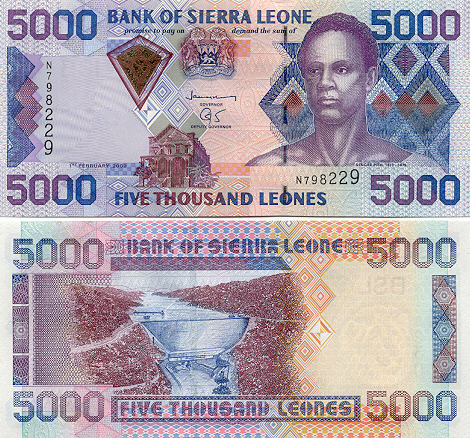
Beauty Masked as Attractive Mathematics I enjoyed my visit to your website http://www.beautyanalysis.com. While I have some issues with your aesthetics (summarized by: what is attractiveness?), I think your analysis is fascinating. The most powerful statement on your website for me is: "MBA believes that this information and technology can empower individuals within our species to have a greater and more clear understanding of human attractiveness and its role in our behavior." Very laudable and very much the most important thing in your work. Your approach to it is a little dated-- it belongs in the 19th Century (no offence). Despite Picasso’s efforts, there is an obvious struggle still taking place in our increasingly image-centric global culture, between a monolithic concept of beauty and the plural one embracing gender, age and ethnicity that we have inherited. Like the Victorians and today’s fashion magazines and video images, you are using your wonderful mathematical tool to squeeze everyone into the facial features of a Swedish blonde. Your analysis pre-supposes that beauty has a normal distribution – that some people are more beautiful than others. Why does this have to be so? While arbitrarily, we can set a standard like your webpage, with one facial form at one end and another at the other (based in your case on the goodness-of-fit to the “Mask”, correlating that with attractiveness is in my opinion, impossible. I believe that your technology is more useful for understanding the plurality of attractiveness than for standardizing the concept of beauty. You have found an ideal mask but do not discuss the vast and deeply significant history of masks in human culture. I am from Sierra Leone where we have one mask tradition associated with female education, social initiation and beauty called Bundu or Sande. I would guess that it is the direct equivalent of your ideal of attractiveness as expressed by these cultures. I invite you to, as they say in the vernacular, ”analyse these” : Images of Bundu masks on Google You might also consider this next link that discusses what engenders attractiveness in these masks: Mende concepts of beauty/attractiveness If beauty is in the eye of the beholder, then surely attractiveness must itself consist of a magical internal decagon of smell, sight, sound,etc… you get the idea. West African mask traditions are an unparalleled exploration of the geometry of beauty, attractiveness, humanness, and spirituality in the face. Everything from raw triangles and circles among the Dogon to stunningly idealized Benin Bronzes can be found: African masks You are on dangerous ground when you say: “The primary image of "humanness" is the genetically coded visual image of an "ideal" human face. The more a face resembles this "Ideal Human Face Image" - the more we perceive it to be human. When a face is perceived to be human that perception sets off in us a conscious response of "attraction" and "positive emotion". If this subconscious visual perception of "humanness", if strong enough (that is if the face we see looks enough like our subconscious image of "humanness"), then the conscious response will be elevated to a combination of a sense of "strong attraction" and a sense of "strong positive emotion". “ This is classic eugenics. Based on this argument, I would say that the vast majority of humans still struggle to perceive humanness in a positive way! Once again my problem is with – I quote, “our subconscious image of "humanness"” -- though the actual mechanistic representation of the image –and how it is connected to attraction and positive emotions may be the same in our brain cells, how we project the visual image of a face in front of us onto it is surely unique to the individual – and rather plastic. It is well known that the young of many species go through a period after birth called imprinting when their brains decide what should be their “mother” or more generally, The primary internal image that we have of our OWN face is not visual – it is sensory. The first visual image(s) we have of our faces are typically those of our parents. We must map the visual images onto the sensory image, and learn that the sensory image can be made to map to several visual images including “repose frontal” and “smiling frontal” archetypes. I saw a news article somewhere recently saying that recognition of emotions is pretty much independent of culture so there should definitely be more archetypes for you to find. It is in the nature of ethnicity-- perhaps even its origin—that other ethnic groups should be ‘non-ideal’ and engender ’repulsion’ and ‘negative emotion’. This is the biggest challenge to multiculturalism and true Cultural Liberty. There is about 10 times as much genetic variation among Africans as there is among all other ethnic groups—any analysis of human facial variation should reflect that. The New World was built by Mende people from Sierra Leone among many others enslaved (see http://www.amistad.org/ and this image of Sengbe Pieh on a modern bank note). If you compare the Mende Bundu masks in the links above with 19th Century European art, it is clear that there must have been a real clash in the perception of beauty, attractiveness and humanness underlying the encounter of Europe with Africa. It clash still exists today and of course, analogous things still apply with sex (homophobia) and age too. They also apply to other species—another area that mask-making traditions have explored extensively, and which I believe is an important future frontier for your work. I have always been fascinated by the resemblances between individual human faces and other animal species. Like my friend Charles Fox who actually resembled a fox! On the other modern bank note shown in the link above, you will see a picture of Bumbuna Hydroelectric Dam. I visited there recently, and share with you these two pictures showing how images of faces can be projected on the wings of insects. Instead of flying away when disturbed, this creature spreads its wings and presents a dramatic face to would-be predators. Boo! Note the realistic eyes complete with white reflection of the light in the center of the pupil and the eyebrows. I wonder, does your mask fit? Which one? Repose or smiling? One of the most amazing discoveries of the last 20 years is homeotic genes. They were first discovered in flies but have since been found to be widespread in nature. In a nutshell, versions of these genes control the development of bodyplan/shape in almost every creature examined so far—plant and animal. This link: http://www.dhushara.com/book/evol/homeo/homeo.htm gives a good graphical illustration of the point. So the genes that establish the Golden Ratios in flowers, flies, worms, whales and humans are all directly related – even still occurring in the same order along the DNA strand some times. Our attitude towards animals (ownership, consumeable resource, etc.) implicitly denies them the humanness black people fought for for 400 years. Now that we know that biological mechanisms are there to create the golden symmetries that supposedly evoke “the Beauty Response” shouldn’t we invest the time to nurture positive reactions towards animals? Some of us have—the Dinka’s and the Hindus adore cows. But there are creatures even closer to us on the evolutionary scale. There are 75 chimpanzees in rehabilitation at the Tacugama Chimp Sanctuary – I could arrange to get you the photographs you would need to analyse them. Personally, I would be very interested in the quantitative difference between the human masks and the chimp masks since genetically, humans and Chimps are about 96% percent identical (the genome of chimpanzees has just been published this week). Both facial archetypes presumably emerge from the decagon in your beautiful animation—Oh, did I say beautiful? Animation? Now there is a word with potential—animation. I have a new use for it. I believe the future holds a more enlightened time when your technology will empower surgeons to offer cosmetic face surgery that makes fashionable individuals look more like-- another species (Catwoman? Spiderman? Batman?). If I am still alive, I would opt to look like one of the magnificent masks our ancestors used to explore the infinite landscape of attractiveness.